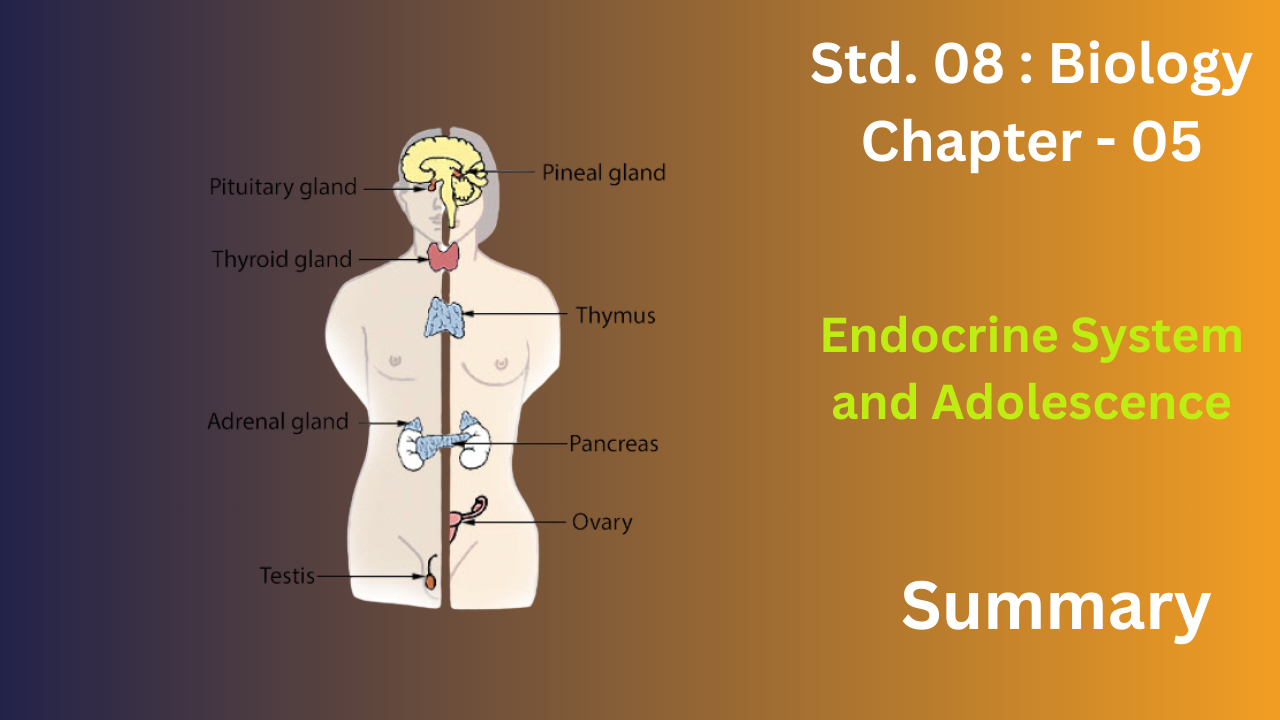
This chapter dives into the fascinating world of the endocrine system and how it orchestrates the dramatic changes we experience during adolescence. Think of the endocrine system as your body’s team of tiny chemical factories, called glands. These glands produce powerful messengers known as hormones, which are released directly into your bloodstream. Like tiny delivery trucks, these hormones travel throughout your body, targeting specific organs and tissues to regulate all sorts of processes, most notably growth and development.
A significant chunk of the chapter focuses on adolescence itself – that in-between stage, usually from about 11 to 19 years old, where you’re no longer a child but not quite an adult. It really emphasizes how hormones are the driving force behind all the physical changes that happen during this time. You’ll learn about:
- That sudden increase in height and weight, often called a growth spurt.
- How your body shape starts to change, with boys developing broader shoulders and more muscle, and girls developing wider hips.
- The sometimes awkward change in voice that boys go through as their voice box (larynx) gets bigger.
- Why you might experience more oily skin and even acne due to the increased activity of your sweat and oil (sebaceous) glands.
- And, of course, the development of sexual characteristics, like the maturation of your reproductive organs, and secondary sexual characteristics, such as facial hair in boys and breast development in girls.
The chapter also zooms in on puberty, which is a specific part of adolescence focused on when your reproductive organs mature and become capable of functioning. It explains the start of sperm production in boys and the beginning of menstruation (that monthly cycle involving the release of an egg and the shedding of the uterine lining) in girls.
Beyond just the biological changes, the chapter wisely points out the importance of personal hygiene during this time, mainly because those sweat and oil glands are working overtime. It stresses the need for:
- Eating proper and safe food – a balanced diet packed with proteins, carbs, healthy fats, vitamins, and minerals to fuel all that growth.
- Maintaining a proper lifestyle by getting regular exercise and enough sleep, and steering clear of harmful things like alcohol, drugs, and tobacco.
- Practicing good cleanliness habits, like regular bathing, washing your hands, brushing your teeth, and wearing clean clothes to keep infections at bay.
- Getting regular physical exercise not just to stay fit but also to help manage stress.
Speaking of stress, the chapter acknowledges that stress can be a common experience during adolescence due to all the physical, emotional, and social shifts happening. It offers some helpful tips for managing stress in healthy ways, like trying yoga, exercising, practicing deep breathing, engaging in hobbies you enjoy, and learning how to manage your time effectively.
Essentially, this chapter gives you a clear picture of how the endocrine system and its hormones are key players in the physical transformations of adolescence, especially during puberty. It also highlights the crucial role of taking care of yourself through good hygiene and finding healthy ways to deal with stress during this significant period of your life.
REVIEW QUESTIONS
Multiple Choice Questions:
1. Put a tick mark (✓) against the correct alternative in the following statements:
(a) Cortisone hormone is secreted by:
- Medulla of adrenal
- Cortex of adrenal
- Pancreas
- Thyroid
(b) Which one of the following hormones stimulates the breakdown of glycogen in the liver into glucose:
- Insulin
- Adrenaline
- Glucagon
- Thyroxine
(c) Which one of the following hormones converts excess of glucose into glycogen:
- Glucagon
- Thyroxine
- Insulin
- Adrenaline
(d) Which one of the following glands is also called master gland:
- Pituitary gland
- Adrenal gland
- Thyroid gland
- Ovary
(e) The emergency hormone to face the danger or to fight is secreted by:
- Islets of Langerhans
- Adrenal cortex
- Pituitary
- Adrenal medulla
(f) Which one of the following endocrine glands produces its hormone in large quantities as a result of emotional stimulation?
- Thyroid
- Islets of Langerhans
- Adrenal medulla
- Adrenal cortex
The adrenal medulla produces its hormone in large quantities as a result of emotional stimulation.
(g) In humans, increased thyroxine production results in (tick the correct answer):
- Increased metabolism
- Decreased metabolism
- Dwarfism
- Cretinism
Short Answer Questions:
Question 1.
What is a hormone?
Answer:
A hormone is a chemical messenger produced by specialized cells, usually within an endocrine gland, and released into the bloodstream to travel to other parts of the body. These messengers exert their effects on specific target cells or organs, influencing a wide range of bodily functions. 2Think of them as tiny signals that coordinate activities between different parts of your body, ensuring everything works in harmony
Question 2.
In the table given below, fill in the blanks by naming endocrine glands, the hormones they secrete, and the function they perform, in a normal person.
Answer:
| S.No. | Name of the gland | produced | Function |
| 1. | Thyroid | Thyroxine | Control of metabolic rate |
| 2. | Pancreas | Insulin | Regulation of sugar in the blood. |
| 3. | Adrenal | Adrenaline and cortisone | Preparing the body for action |
| 4. | Pituitary | (i) Growth hormone(ii) Thyroid-stimulating hormone | (i) For growth(ii) Stimulates thyroid gland to secrete thyroxine |
Question 3.
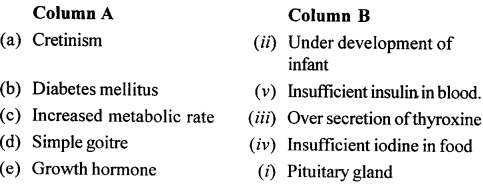
Match the items in Column A with those in Column B. Column A Column B
Answer:
Question 4.
Name the source and the function of each of the following hormones:
| Hormone | Source | Function |
| (a) Glucagon(b) Thyroxine(c) Adrenaline(d) Insulin(e) Cortisone |
Answer:
| Hormone | Source | Function |
| (a) Glucagon | Pancreas | Breakdown of glycogen to glucose. Raises sugar in the blood. |
| (b) Thyroxine | Thyroid gland | Control of metabolic rate |
| (c) Adrenaline | Adrenal gland | Prepare the body to face emergency, stress |
| (d) Insulin | Pancreas | Regulation of sugar in the blood. |
| (e) Cortisone | Adrenal cortex | Regulates carbohydrate metabolism. Its deficiency causes Addison’s disease. |
Question 5.
What is the difference between an exocrine gland and an endocrine gland?
Answer:
Exocrine glands are like local delivery services with their own pipelines for targeted action – think sweat cooling you down in Pune’s heat or saliva aiding digestion. Endocrine glands, on the other hand, are like internal broadcasters, releasing hormones directly into the bloodstream for a widespread, systemic effect, like the thyroid affecting metabolism or adrenaline preparing your whole body for action. It’s the difference between a direct delivery and a general announcement across the body.
Question 6.
Why is the pituitary gland called “master gland”?
Answer:
The pituitary gland is truly a powerhouse, earning its “master gland” nickname for good reason. 1 Imagine a conductor leading an orchestra – that’s essentially what the pituitary does for your endocrine system. It diligently produces and releases a whole symphony of hormones that then direct the activities of other important glands like the thyroid, the adrenals, and the reproductive organs. 2 This intricate communication network ensures that all your hormones are in perfect harmony, allowing your body’s systems to operate smoothly and maintain that crucial internal balance.
Question 7.
Briefly write about the importance of physical hygiene during adolescence.
Answer:
Navigating the changes of adolescence definitely involves keeping up with hygiene. Daily showers, washing hands often, and regular brushing are super important for staying clean and preventing breakouts and body odor. Feeling fresh can also give a real boost to how you feel about yourself, which is a big deal when you’re connecting with friends.
Question 8.
Briefly discuss any four activities which can be practiced to overcome stress.
Answer:Mindful Breathing: Taking a few moments to focus on your breath – inhaling deeply and exhaling slowly – can calm your nervous system and bring you to the present moment.
Physical Activity: Engaging in regular exercise, even a short walk, releases endorphins that have mood-boosting and stress-reducing effects.
Connecting with Others: Spending quality time with loved ones or talking to a supportive friend can provide comfort and a sense of belonging, which buffers against stress.
Engaging in a Hobby: Dedicating time to an enjoyable activity, like painting, gardening, or playing music, can provide a mental escape and a sense of accomplishment, reducing feelings of stress