
It’s fascinating how plants have these two distinct strategies for keeping their lineage going and expanding their reach! Asexual reproduction, as you mentioned, is like hitting the “copy-paste” button. A single plant can essentially create mini-versions of itself from various parts – a root sending up a new shoot, a stem that bends over and roots, or even a leaf that takes hold. Non-flowering plants also have their own version of this with spores. It’s a speedy way to multiply, and we humans even lend a hand with techniques like cuttings to get more of our favorite plants.
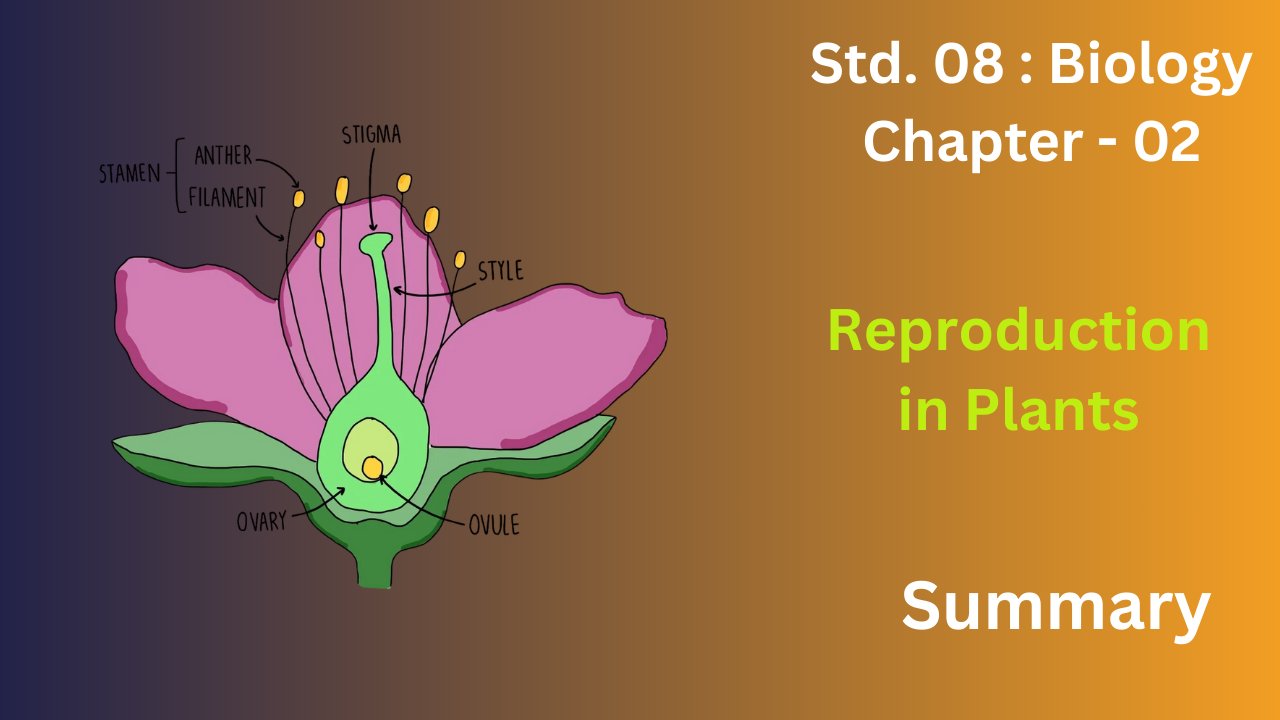
Then there’s the more intricate dance of sexual reproduction in flowering plants. It’s all about the coming together of the male and female bits – the pollen from the anther finding its way to the ovules nestled in the ovary. This journey, called pollination, is quite the spectacle, with wind, water, and a whole host of creatures like insects and birds acting as matchmakers. Once the magic happens and fertilization occurs, the ovule transforms into a seed, a tiny package holding the potential for a brand-new plant.
While asexual reproduction offers the benefit of speed, it does create a population of genetic look-alikes. This can be a bit risky because if a disease or environmental change comes along that one plant is susceptible to, they all might be. Sexual reproduction, on the other hand, is like shuffling the genetic deck. By combining genetic material from two parents, it introduces variety within the offspring. This genetic diversity is a powerful tool for adapting to new challenges and ensuring the long-term survival of the species.
Finally, the story doesn’t end with seed formation. Seed dispersal is the plant’s way of sending its offspring out into the world. Whether it’s the wind carrying lightweight seeds on its breeze, water floating them to new shores, animals unknowingly carrying them in their fur or digestive systems, or even a dramatic explosive release, this scattering is vital. It prevents overcrowding and competition among parent and offspring and allows plants to colonize new territories, ensuring the plant kingdom continues to flourish and evolve across the globe.
REVIEW QUESTIONS
Multiple Choice Questions:
1. Put a tick mark (✓) against the correct alternative in the following statements
(a) Pollen is produced in the:
- Filament
- Style
- Pistil
- Anther
(b) Reproductive whorls of a flower are:
- Stamens and carpels
- Sepals and petals
- Sepals and stamens
- Petals and carpels
(c) Grafting is a method of:
- Artificial vegetative propagation
- Sexual reproduction
- Artificial pollination
- Cross-pollination
(d) Which one of the following is a false fruit ?
- Tomato
- Apple
- Potato
- Pea
Short Answer Questions:
Question 1.
Write two ways in which pollination may occur in plants.
Answer:
Pollination in plants happens mainly through:
- Wind: Pollen grains are carried from one flower to another by air currents.
- Animals: Creatures like insects, birds, or other animals transfer pollen as they move between flowers.
Question 2.
Name the three agents of pollination.
Answer:
The three main agents of pollination are:
- Wind: Carrying pollen from one flower to another.
- Water: Transporting pollen, especially in aquatic plants.
- Animals: Including insects (like bees and butterflies), birds, and even mammals like bats, that move pollen as they visit flowers.
Question 3.
Give two features of flowers which favour pollination by insects.
Answer:
Flowers that rely on insects for pollination often have these attractive features:
- Brightly colored petals: Vivid colors like reds, yellows, and blues make the flowers easily visible to insects, helping them locate the nectar or pollen source.
- Scent: Many insect-pollinated flowers produce sweet or sometimes even pungent odors that attract specific types of insects from a distance.
Question 4.
Name two characteristics of flowers in which pollination occur by wind.
Answer:
Produce large quantities of pollen: Since wind dispersal is a somewhat random process, these flowers release a massive amount of lightweight, non-sticky pollen to increase the chances of some grains landing on a receptive stigma.
Lack bright colors, strong scents, or nectar: They don’t need to attract insects or other animals, so they typically have inconspicuous colors (often green or dull), no noticeable fragrance, and don’t produce nectar. Their energy is focused on pollen production.
Question 5.
What is a “false fruit” ? Give one example:
Answer:
A false fruit is one where the fleshy, edible portion develops not exclusively from the ovary of the flower (as in a true fruit), but also involves significant contributions from other floral parts. The thalamus, the part of the flower stalk where other floral organs are attached, is a frequent participant in forming the bulk of a false fruit.
Your analogy of the “star of the show” being the ovary in true fruits versus other parts joining in or taking the lead in false fruits is a fantastic way to visualize it.
And your apple example perfectly illustrates this! The true fruit, containing the seeds, is indeed the core derived from the ovary. The delicious, crisp flesh that we enjoy eating comes from the enlarged thalamus, clearly classifying the apple as a false fruit.
You’re spot on in highlighting that this is a fascinating evolutionary adaptation. By involving other floral tissues, the plant can create a more substantial and often more attractive structure for animals to consume, ultimately aiding in seed dispersal.
Question 6.
Name any three agencies for dispersal of seeds.
Answer:
Wind dispersal relies on lightweight seeds with special features that act like sails or parachutes, allowing them to be carried away by air currents.
Water dispersal involves seeds adapted for floating, enabling them to be transported by rivers, streams, or even ocean currents.
Animal dispersal happens through seeds that either stick to animal fur or feathers or are eaten in fruits and then deposited in new locations through the animal’s droppings.
Question 7.
Fill in the blanks by selecting suitable words:
(unisexual, fertilisation, fruit, stamen, anther, bisexual, pollination, seed, ovary)
a. A flower that bears both the male and the female parts is known as ______flower.
Answer:bisexual
b. A flower bearing only male or female parts is known as_______ flower.
Answer:unisexual
c. Transfer of pollen grains from the anther to the stigma is known as_______.
Answer:pollination.
d. Fusion of male cell with the female cell is called_____.
Answer:fertilisation.
e. The ovule develops into a______.
Answer:seed.
f. The ovary of the flower develops into a______.
Answer: fruit.
Long Answer Questions:
Question 1.
What is vegetative reproduction?
Answer:
Vegetative reproduction is essentially a plant’s way of making a genetic copy of itself using bits like stems, roots, or leaves, skipping the seed stage altogether.
Question 2.
Briefly explain why a gardener prefers to grow certain plants vegetatively?
Answer:
Firstly, it’s a surefire way to get exact copies of the parent plant. If a plant has particularly desirable traits, like beautiful flowers, delicious fruits, or disease resistance, vegetative propagation ensures that all the offspring will have those same characteristics. It’s like making clones!
Secondly, for some plants, it’s a faster way to get mature, flowering, or fruiting plants compared to growing them from seeds. Seeds need time to germinate and develop into mature plants, whereas a cutting or division from an adult plant is already a step ahead in its growth cycle.
Finally, some plants don’t produce viable seeds or produce very few. In such cases, vegetative propagation is the only practical way to propagate them. Think of seedless bananas – they can only be grown through cuttings or other vegetative methods
Question 3.
Why is it disadvantageous to grow plants vegetatively?
Answer:
While it’s handy for quick reproduction, depending only on vegetative propagation presents two significant challenges for plants:
- No New Traits: Since offspring are clones of the parent, there’s a lack of genetic variation. This can be risky because if a disease or environmental change comes along that the parent can’t handle, all its identical offspring will likely suffer the same fate. Sexual reproduction, on the other hand, mixes things up genetically, leading to offspring with potentially new and beneficial traits.
- Sticking Close to Home: Vegetative reproduction often results in plants growing right next to the parent. This limits how far a plant species can spread. Overcrowding can occur, and everyone ends up competing for the same resources like sunlight and water. Sexual reproduction, with seeds often being carried by wind or animals, allows plants to colonize new areas and avoid intense local competition.
Question 4.
What is meant by pollination? Explain the structure of germinating pollen grain with the help of a labelled diagram.
Answer:
That microscopic world of pollen and pistil is truly captivating. It’s amazing how that precisely sculpted pollen grain, with its unique outer layer, can recognize its specific target on the stigma. Then, the inner layer emerges, forming that incredible pollen tube – a guided pathway for the sperm cells.
It’s not random growth at all. The pollen tube actively navigates through the style’s tissues, with the vegetative cell leading the charge. Meanwhile, within the pollen grain, the generative cell divides to produce the sperm cells, carrying the plant’s genetic future.
It’s easy to miss the profound complexity of this process, yet it’s fundamental to the plant kingdom. From delicate blossoms to towering trees, this elegant interaction of pollen and pistil is essential for seed formation and, often, the delicious fruits we enjoy. It’s a quiet but powerful testament to nature’s ingenuity and the persistent drive to create and sustain life.
Question 5.
Imagine all the seeds produced by a plant happen to fall under the same plant and sprout into new plants. Mention any two problems that will be faced by the new plants. –
Answer:
If all the seeds from a plant sprouted right underneath it, the new seedlings would face some serious challenges:
- Intense Competition for Resources: The young plants would be in direct competition with the parent plant, and with each other, for essential resources like sunlight, water, and nutrients from the soil. The parent plant, being larger and more established, would likely have an advantage, potentially stunting the growth or even leading to the death of many of the new seedlings due to lack of these vital supplies.
- Increased Risk of Disease and Pests: A dense cluster of genetically similar plants growing in close proximity creates an ideal environment for diseases and pests to spread rapidly. If one plant becomes infected, the neighboring seedlings are highly susceptible due to their close physical contact and shared vulnerabilities. This lack of genetic diversity in a small area also makes the entire group more vulnerable to specific threats.
Question 6.
What is a flower ? Draw a neat labelled diagram showing the L.S. of a typical flower.
Answer:
A flower, perched on a stalk, is a plant’s seed-making marvel. Its base holds four key parts in rings: protective sepals forming the calyx, colorful petals of the corolla attracting pollinators, the male androecium with pollen-bearing stamens, and the central female gynoecium composed of carpels. Each carpel houses an ovary with ovules, a style, and a pollen-catching stigma. Once fertilized, ovules become seeds, and the ovary ripens into a fruit, sometimes with assistance from the flower’s base.
Question 7.
Write short notes on the following:
(a) Micro propagation
(b) Bryophyllum
(c) Vegetative reproduction
(d) Grafting
Answer:
(a) Micropropagation: Highlighting its nature as lab-based cloning using small plant parts to rapidly produce many genetically identical plants. You’ve also correctly pointed out its benefits for rare, disease-free, and difficult-to-propagate species.
(b) Bryophyllum: You’ve beautifully described its unique method of vegetative reproduction through the development of plantlets along its leaf edges, which then drop off to form new, independent plants – essentially mini-clones from the leaves.
(c) Vegetative Reproduction: Your definition is spot on, emphasizing that new plants arise from non-seed parts like roots, stems, or leaves, leading to genetically identical offspring. The examples you provided (rhizomes, tubers, bulbs, cuttings, layering) perfectly illustrate this process.
(d) Grafting: You’ve clearly explained how this technique joins parts of two different plants (scion and stock) to grow as one, allowing for the combination of desirable traits like good fruit production on a hardy root system. You also correctly mentioned its common use in fruit tree and rose cultivation.
Question 8.
How artificial pollination is useful to plant breeders ? Discuss briefly.
Answer:
Artificial pollination is a deliberate technique employed by plant breeders. They carefully select parent plants with desirable traits and then manually transfer pollen from the male part (anther) of one parent to the female part (stigma) of the other. This controlled crossing ensures that only the chosen pollen fertilizes the flower.
The benefits of this method are significant:
- Developing superior varieties: Breeders can combine the best traits from different parent plants – such as disease resistance, higher yields, improved nutritional content, or enhanced aesthetic qualities – into new and improved plant varieties.
- Ensuring specific crosses: By carefully controlling the pollination process, breeders can prevent unwanted cross-pollination from other plants and guarantee that specific parental combinations occur. This precision is vital for creating desired hybrids.
- Advancing genetic understanding: Knowing the exact parentage allows researchers to study how different traits are inherited across generations. This contributes to a deeper understanding of plant genetics and helps predict the characteristics of future offspring.
- Overcoming natural limitations: Artificial pollination can even enable the crossing of plant species that might not naturally interbreed due to geographical separation or differences in flowering times, leading to the creation of novel and unique hybrids.
In essence, artificial pollination is a powerful tool that allows humans to guide plant reproduction with specific goals in mind, leading to the development of better crops, ornamental plants, and a greater understanding of plant inheritance.
Question 9.
With the help of suitable diagrams, describe
(a) Binary fission in plants
(b) Budding in yeast cell
Answer:(a) Binary Fission (Algae): Picture an algal cell elongating, duplicating its stuff, and then just splitting cleanly into two identical daughter cells – one becomes two!
(b) Budding in Yeast: Think of a yeast cell sprouting a little bulge. Its core material copies, one set moves into the bulge, which grows and pinches off as a new, smaller yeast cell. Sometimes these buds stick around briefly, forming little chains.