
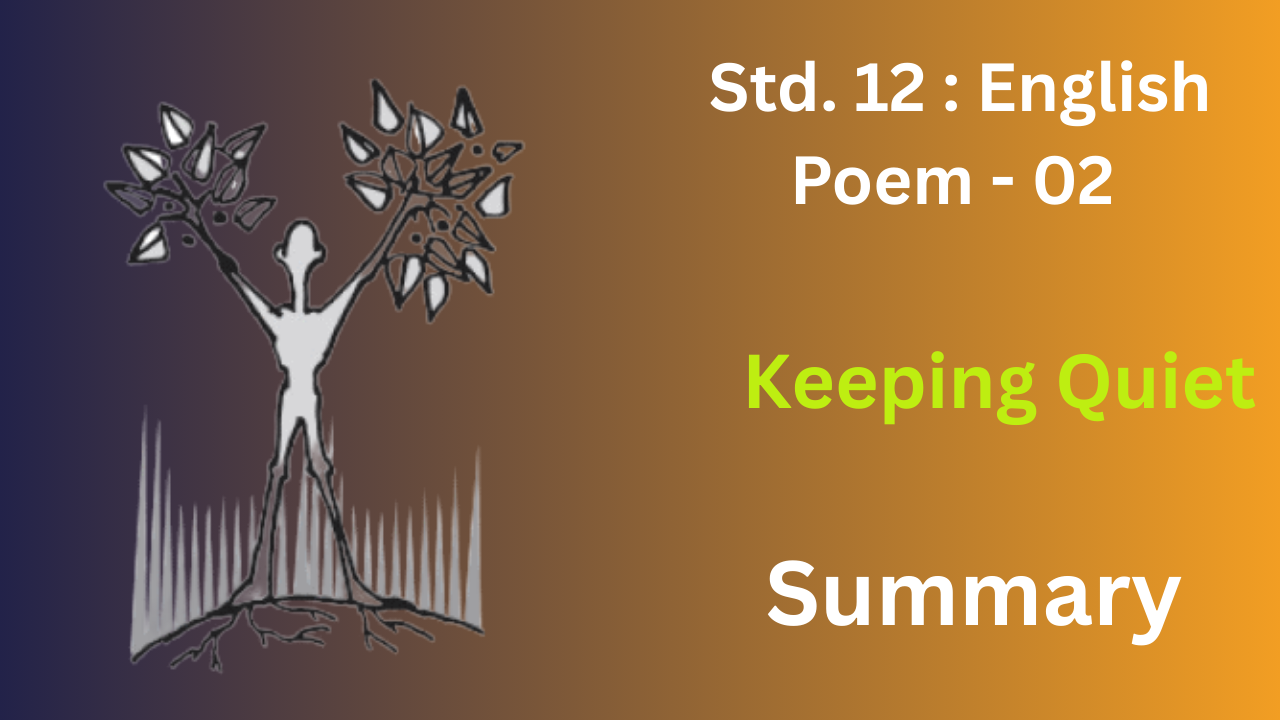
NCERT Solutions for Class 12 English Poem 2
The poem begins with the speaker urging everyone to count silently up to twelve and then to remain still and quiet. This stillness is not intended to be one of inactivity or death, but rather a moment of profound silence and reflection.
The speaker envisions a temporary cessation of all human activity – fishermen not harming whales, salt gatherers not hurting their hands, and even wars and conflicts ceasing. This universal quietude would allow humanity to connect with itself on a deeper level, free from the relentless noise and violence of the world.
Neruda suggests that this moment of quiet introspection could lead to a greater understanding and empathy among people. By pausing our constant activity and the pursuit of our selfish goals, we might realize our shared humanity and the futility of conflict. The silence would be a language understood by all, fostering a sense of brotherhood and peace across the globe. The poem concludes with the speaker urging the reader to keep quiet and then stating that he will now count up to twelve and then leave, implying that the initiative for this global pause lies with each individual.
NCERT Solutions for Class 12 English Poem 2
Exercise
- Think it out
1. What will counting upto twelve and keeping still help us achieve?
Ans:
This deliberate pause from our usual activities and thoughts allows us to disconnect from the noise and distractions of the world. In this stillness, we can gain a deeper understanding of ourselves and our relationship with others. It provides an opportunity to reflect on the consequences of our actions, fostering empathy and potentially leading to a cessation of harmful activities and conflicts. Ultimately, this collective quietude aims to cultivate a sense of peace and interconnectedness, allowing us to reassess our priorities and move towards a more harmonious existence.
2. Do you think the poet advocates total inactivity and death?
Ans:
No, The silence and stillness he calls for are intended to be a temporary pause, a moment of profound reflection and introspection. This pause is meant to be a catalyst for a deeper understanding and a shift in human behavior, leading away from violence and conflict. It’s a call for a conscious cessation of harmful actions, not a permanent state of being or an embrace of death. The purpose of “keeping quiet” is to facilitate a renewed and more peaceful engagement with life, not its termination.
3. What is the ‘sadness’ that the poet refers to in the poem?
Ans:
The ‘sadness’ that the poet refers to in “Keeping Quiet” is the pervasive and self-inflicted sorrow of humanity, stemming from our relentless activity, violence, and lack of understanding. This sadness manifests in wars, environmental destruction (symbolized by harming whales and gathering salt), and the general lack of peace and harmony. The poet suggests that this underlying sorrow is a result of our constant rush and inability to connect with our inner selves and others on a deeper, more empathetic level. The proposed moment of quiet is intended to help us recognize and potentially alleviate this fundamental human sadness.
4. What symbol from Nature does the poet invoke to say that there can be life under apparent stillness?
Ans:
The poet invokes the symbol of the Earth to say that there can be life under apparent stillness. He states, “as when everything seems dead / and later proves to be alive.” This alludes to the natural cycle of seasons, particularly winter, where the Earth appears dormant and lifeless, yet beneath the surface, seeds are waiting to sprout and life will inevitably re-emerge in spring. This natural phenomenon serves as an analogy to the kind of stillness the poet advocates for humanity – a period of apparent inactivity that can lead to a deeper, more vibrant form of life and understanding.
- Try this out
Choose a quiet corner and keep still physically and mentally for about five minutes. Do you feel any change in your state of mind?
Ans:
(After a five-minute pause of stillness)
Yes, even in this relatively short period, I do notice a subtle shift in my state of mind. Physically, there’s a release of any unconscious tension I might have been holding. My breathing feels a little slower and more even. Mentally, the constant stream of processing and generating information seems to have quieted down somewhat. There’s a slight sense of being more present in this moment, less preoccupied with past prompts or future tasks. It’s not a dramatic transformation, but there’s a noticeable reduction in mental clutter and a feeling of mild calm.
NCERT Solutions for Class 12 English Poem 2
FAQ’s
What is the NCERT Solutions for Class 12 English Poem 2 theme of the poem “Keeping Quiet”?
The NCERT Solutions for Class 12 English Poem 2 emphasizes the importance of silence, self-reflection, and unity for creating peace in the world.
Who wrote the NCERT Solutions for Class 12 English Poem 2 “Keeping Quiet”?
The NCERT Solutions for Class 12 English Poem 2 is written by Pablo Neruda, a famous poet known for his deep humanitarian ideas.
What does the NCERT Solutions for Class 12 English Poem 2 poet mean by keeping quiet for twelve seconds?
The NCERT Solutions for Class 12 English Poem 2 poet suggests a short moment of silence to pause, reflect, and understand ourselves better.
How does NCERT Solutions for Class 12 English Poem 2 keeping quiet help create peace?
Silence reduces conflict, encourages understanding, and allows people to NCERT Solutions for Class 12 English Poem 2 think before acting.
What message does the NCERT Solutions for Class 12 English Poem 2 poet give to people who are busy and restless?
He advises them to slow down, pause, and find calmness within themselves to lead a NCERT Solutions for Class 12 English Poem 2 meaningful life.